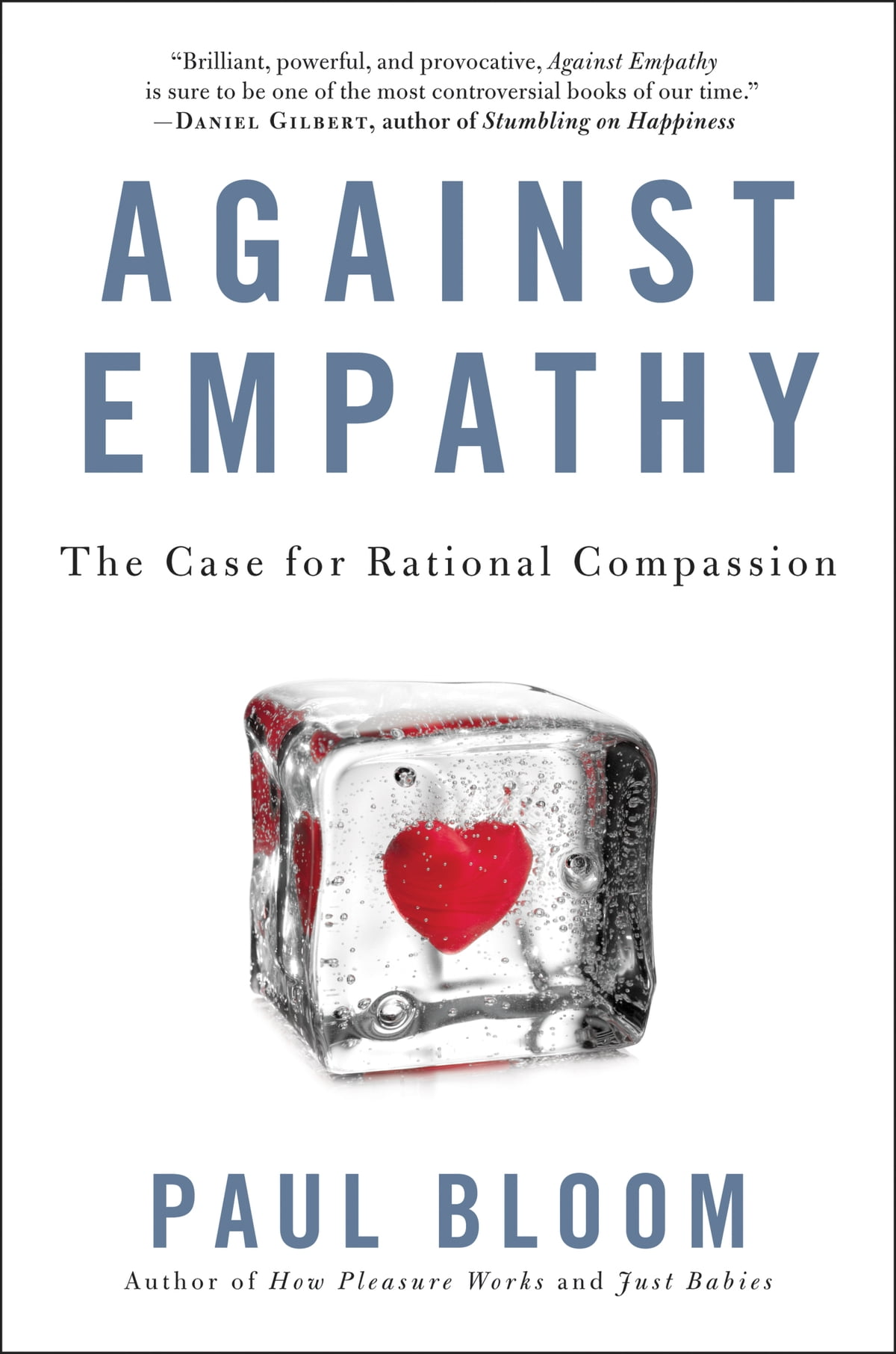
I have a drive to explore unconventional ideas. Curiosity and passion are wonderful for life-long learning. In a recent recommendation Paul Bloom’s Against Empathy: The Case for Rational Compassion caught my attention. The challenge that Mr. Bloom presents is against the widely accepted belief that empathy is an essential component of moral behavior.
Bloom argues that empathy might prove detrimental and that rational compassion a superior approach to ethical decision-making. This bold and thought-provoking perspective is precisely why I chose a deeper read in Bloom’s arguments.
Empathy’s Role in Decision-Making
Empathy is often hailed as a virtue that enhances our moral compass, but Bloom asserts that it can lead to biased and harmful decisions. I am fascinated by the psychology behind decision-making. Bloom’s critique of empathy presents an opportunity to identify a far more learned perspective than mine to re-evaluate commonly held assumptions.
Empathy can, in reality, prove a subjective bias towards those similar to us or those we identify with piques an interest to further understand underlying mechanisms.
The Rational Compassion Appeal
The alternative: rational compassion.
Rational compassion, as described, is a focus on caring for others based on reason and objective principles rather than emotional responses.
This approach aligns with ethical philosophy and practical decision-making.
Rational compassion may promise a more balance to helping others, free from the distortions of emotional bias. I am eager to explore the rational compassion application, beyond any one rule.
Bias Buster
Bloom’s critique of empathy and his proposal of rational compassion offer a fresh perspective on ethical decision-making that I find both intriguing and relevant. I look forward to engaging with Bloom’s arguments and reflecting on their implications for my understanding of morality and compassion.
No one wants to get a punch in the nose. My intent to read is to gain further understanding that helps my thinking, not fuel to combat further argument. More practical is insight into motivation.
Some years back I was introduced to thinking that compassion is more the intent people mean when they (mis)use the term empathy. I now often think of the difference.
I am only 22% through this book, so I have a majority ahead of me. Perhaps I may discover further points to challenge me and the majority view of empathy?
Read More Books
See a more current set of books on my reading list heavy rotation page.