Strategic acquisitions are human capital investments. Conventional measures often fall short to forecast an individual’s or team’s correlation to predict future …

Below you'll find a list of all posts that have been tagged as “human capital”
Strategic acquisitions are human capital investments. Conventional measures often fall short to forecast an individual’s or team’s correlation to predict future …

A quiet panic that spreads across offices is AI will replace jobs. That fear feels real, but hides a deeper truth: …

Fast start conversation: Open-plan office space. All the rage. Well, this office space plan may cause a genuine type rage far …

Artificial Intelligence will replace people. That fear reaches anyone who does or does not follow AI news. Yet the fear misses …

If George Washington had wooden teeth, little harm comes from people who believe this myth. People and any performance myth that a department or organization has around human capital, however, creates real impact on motivation and return on involvement.

An Agile focus is on people and interactions to produce
frequent, tangible results. A portfolio perspective is very similar
to 401(k) plans: collect a basket of options to mix and match for
targeted results. Both are current challenges that can deliver
better results.
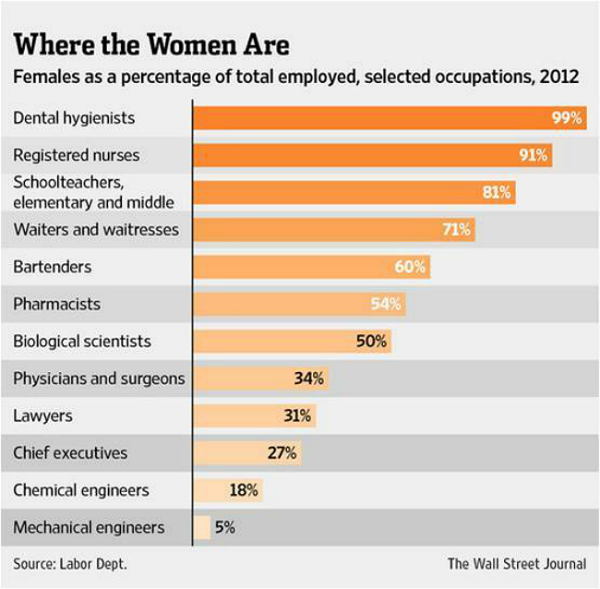
In education our schools reward women. Men can’t hack certain academics: they get worse grades; follow less-rigorous academic programs; and take part in less advanced-placement classes. Post-education, our professional organizations reward men. Women get more criticism and less praise in the workplace than men do, paid 7% less than men, and judged more negatively by prospective employers than men with identical backgrounds. Same species different rules and learning engagement, why?

The mergers and acquisitions world sprinkles potential deals with a bit of pixie dust called synergy. Synergy is neither rational, functional, nor logical.
If HR used the word synergy in an accounting meeting? Laughed out of the room. If HR or human capital used the word synergy in a corporate finance discussion? The time value of money, that is rational. What will it cost? What return will it realize? When will it realize that return? All rational.
Synergy? Synergy is more a pagan fairy than rational way to make a deal.

Human capital management is motivation management. No matter the IQ of an individual or the collected experience of the team without …

The ability to change comes from the desire to change. The key to positive change is a person’s intrinsic motivation to change. Appreciative Inquiry works around a premise that we move and change in the direction we inquire.

Why do people matter? Because people are the only way organizations, and communities, achieve or sustain anything. To understand people you need to understand what answers they look for.
Clear links from content to the place where action occurs is crucial. To move from selling to solving means a move from your motivation to get it done to another’s motivation to solve a challenge. Persona strategies create marketing goals more effective than traditional advertising.

The technical skills, frameworks, and tools that HR and organization development rely on to understand, communicate, and motivate interventions for people and organizations needs a reboot. A relaunch. A restart. This starts with a peek outside their profession: enter marketing, with a social media twist.
The persona effort, based on the usability and goal-oriented design, is a superior framework to plan, launch, guide, monitor, and manage organization interventions and change management initiatives than many organization development frameworks.

A project introduces something new. New requires change from what was to a promise of what will. The project deliverable, or …

Industry myopia culls innovation. People who grow in one industry or cycle, through only one industry may seem safe to hire. …

Organizations don’t simply run from a strategic plan prescription. Projected cash flows don’t deliver themselves. Business units don’t run in a …

Mergers and acquisitions failures are really business strategy project management failures
No matter the motive for a merger or acquisition the real work comes with integration.
Similar to a project scope statement that identifies the success criteria for a project, the only way to identify success or failure is within the scope of the M&A goals.
Subsequently, the risk in mergers and acquisitions comes down to the ability of a team to deliver within budget, by a certain time, and up to project expectation (scope) and project failure rates for M&A deals are strikingly high.

Systems thinking strategies for mergers and acquisitions (M&A) provide better integration valuations and post-merger operations. With mergers and acquisitions systems thinking the …

When evaluating merger integration risk the reality is true integration risk identification can only happen with an evaluation of systems integration. Without front-end, due diligence on human capital integration then too often the deal becomes a post-merger write-off. The result: wasted opportunity, multiples on paper only, and “synergies” left back on the deal table or with the executive hand-shake.