Conway’s Law holds systems reflect structures of the organizations that build them. AI systems simply make that reflection louder, faster, and harder to ignore.

Below you'll find a list of all posts that have been tagged as “organization development”
Conway’s Law holds systems reflect structures of the organizations that build them. AI systems simply make that reflection louder, faster, and harder to ignore.

Every project has faces the frustrating, creeping inefficiency that turns a promising initiative into a chaotic, delayed mess. Too often, too …

A buyer persona is a commonly used approach that helps designers understand customer motivation and behavior. With a buyer persona in …

When corporate-bound (see: handcuffed) professionals hear the term “governance”, their minds often jump through layers of bureaucracy, rigid rules, endless meetings, …

So much corporate money investment to learn. Too little investment in ways to remember. When we add cost of training, such …

Change is not a formula or recipe or one-time check list. Multiply effort to understand change times five for better change.

Companies continue to fail Agile. Culture without practice is Agile without value. Mindset relies on values guided by principles, not templates or training.

Start with belief in why you build something or before you build. A skeptic without belief usually delivers disappointment. Sadly, leaders …

Fast start conversation: Open-plan office space. All the rage. Well, this office space plan may cause a genuine type rage far …

From startups to corporate leviathans, the business directive to be more Agile tends to ring hollow. Scrum is the most popular …

In business we constantly design. By design I include that we design meetings, we design strategy, we design communication, we design training, and we design projects and programs.
Some design efforts, such as strategy, business process re-engineering, or talent engagement initiatives, may result in new processes, new standards, or new tasks, but the design goal remains: adoption and utility.

Why do people matter? Because people are the only way organizations, and communities, achieve or sustain anything. To understand people you need to understand what answers they look for.
Clear links from content to the place where action occurs is crucial. To move from selling to solving means a move from your motivation to get it done to another’s motivation to solve a challenge. Persona strategies create marketing goals more effective than traditional advertising.

The technical skills, frameworks, and tools that HR and organization development rely on to understand, communicate, and motivate interventions for people and organizations needs a reboot. A relaunch. A restart. This starts with a peek outside their profession: enter marketing, with a social media twist.
The persona effort, based on the usability and goal-oriented design, is a superior framework to plan, launch, guide, monitor, and manage organization interventions and change management initiatives than many organization development frameworks.
Below are the slides from today’s Shifting Role of Organization Development in Business conference in St. Louis. To view presentation within this …
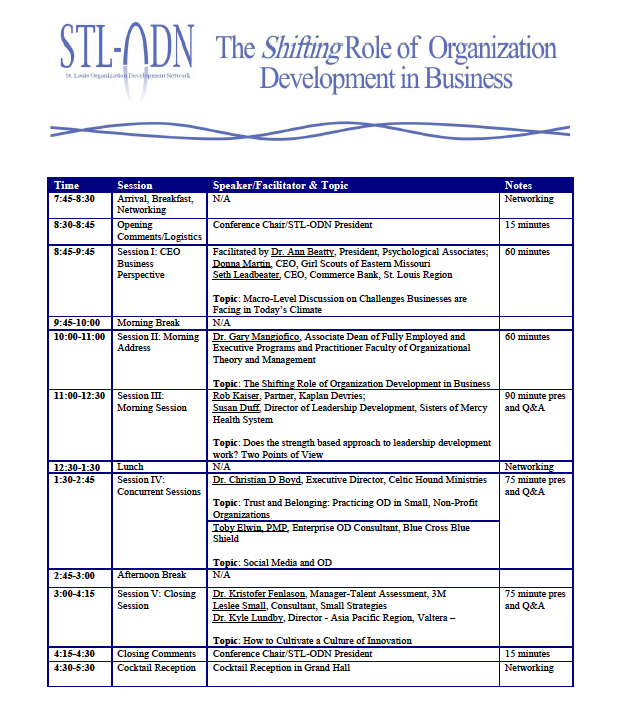
Next week I will speak at the 2012, STL-ODN Conference. The day’s theme: The Shifting Role of Organization Development in Business. …
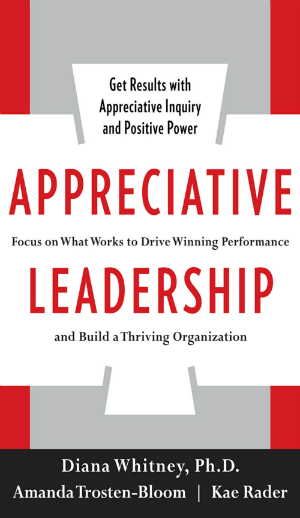
Appreciative Inquiry is on a short-list of prime influences for my management, relationship, facilitation, change management, and organization behavior work. I …

Market change, economy change, technology change, workforce change, communication change, today change riddles stress cracks in organization foundations. Whether 80-year-old companies, Fortune …

Companies develop their own language or accepted terms. Professions develop their own lingo. Organization development clichés are just as tired as all …