The key for organizations to grow and to thrive relies they ability to scope, manage, and deliver projects. How you and your …

Below you'll find a list of all posts that have been tagged as “risk”
The key for organizations to grow and to thrive relies they ability to scope, manage, and deliver projects. How you and your …
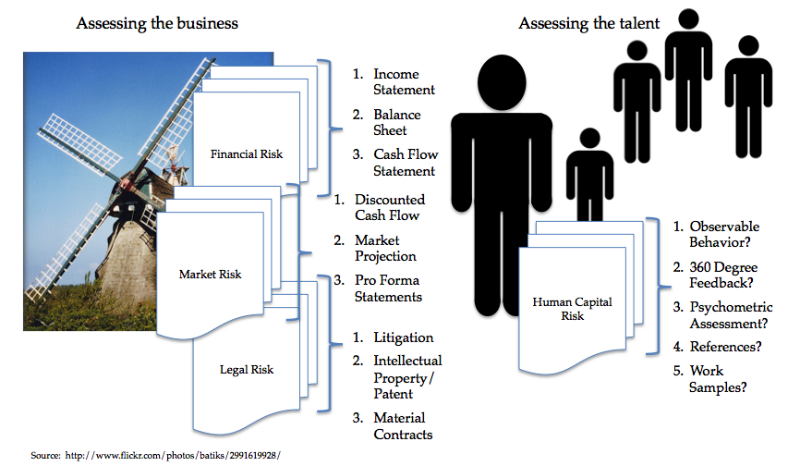
You commonly hear an equity firm or venture capital partner claim to invest in the people. Well, when it comes to costs, …

To deliver what someone expects, when someone expects, and the price someone agrees to requires an ability to define scope.
When a project fails, resources are lost and organization pressure increases. The more projects that fail the more resistant people are to associate with, work on, or fund new projects.
This is a first in a series of scope and project management blogs and templates to improve project delivery with a set of tools and principles to understand and manage project scope, from impact assessment through stakeholder communication.

This morning I read something that made me hold my, very hot, coffee, in my mouth, far longer than intended to process the Laura …

Micromanagers grind work to halt and wastes resources, requisite organization is framework that looks at strategy with time as a critical element for how work is assigned, done, and managed. Requisite organization, or requisite uncertainty, is a great way to empower employees, maximize resources, and modify micromanagers.
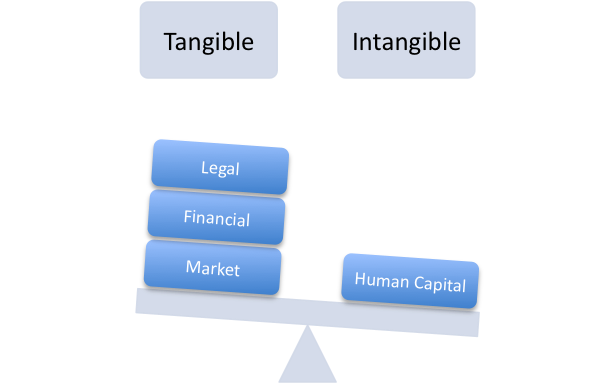
The drive to evaluate operations and to contain costs is mistakenly applied as an operational issue across the board. Too often a …

A venture’s viability really comes down to a bet on a team to deliver. It is the interpersonal process where venture performance …
To identify where risk is a real part of the investment deal you will commonly hear an equity firm or VC …

The ability to scope and deliver a project is a competitive advantage.
The best organizations realize project management capability as a strategic differentiator, the lagging organizations only staff project management skills within Information Technology departments.
I now rely on the term portfolio planning to describe the translation of strategy to a group of project options an organization can undertake. A portfolio view projects priority using the same risk and return criteria capital expenditures and other financial or strategic commitments are evaluated.

Change very often comes in multitudes and magnitudes, rarely in order and procedure, but change resistance seems to come in constant waves.
A Competing Values Framework will identify your current state organization strength and desired state.
Organizations that understand competing values and the impact of culture can train and manage and cultivate people who can grow with the organization. The Competing Values Framework identifies the culture people are working in, any disconnect, by team or business unit, to then create strategies that align to the culture needs to challenge the culture.
What to keep and what focus to adjustment needed to survive or to excel.

All the projects underway across your company share one, elemental risk: all projects across your company are human capital projects. The valuation …

I see and read so much about offers to teach or facilitate innovation, but what is innovation? Innovation has less to …

An organization builds a culture of success when it can take a strategy, identify and prioritize the most important projects within …

Overwhelmingly, organizations rely on process analysis to identify opportunity for savings. Process analysis is most commonly identified as change management. Change …

Organizations, like people, develop. A start-up has different organization qualities than a 25-year-old, Fortune 500 company. As operational needs increase to …
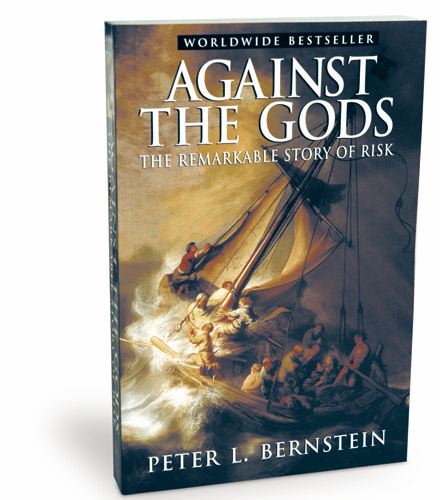
I recently ran across a statistics book and began to think about similarities to strategic planning. Statistics: a mathematical science pertaining …
May 2009 in review. A roundup of blogs from the previous month: Leaders and fishing — Leaders craft the vision and …

Looks to me culture fit has turned into force fit. Company culture is realized in the way things get done at …