
Executives are at the starting line in a race to say, “we’re investing in Artificial Intelligence!” With the same enthusiasm that 15 years earlier proclaimed “we’re going digital!”. Back then, going “digital” meant a new website to drive performance. Today, AI means new performance to drive performance. Either way, the illusion of confidence far exceeds the comprehension. Why? Because the same symptom gets ignored: technology relies on people and process.
The artificial intelligence (AI) promise automates not just what we do, but how we think. Efficiency targets to write emails, to approve loans, to diagnose illness, and to manage calendars. The future seems more intelligent.
But whose intelligence, exactly?
The first thing AI will expose is how much of corporate life never required human intelligence to begin with. Much of what passes for “knowledge work” is rule-following and repetition wrapped in PowerPoint. When AI takes that over, many will call it disruption. I call it honesty.
“AI promises considerable economic benefits, even as it disrupts the world of work”
McKinsey & Company.
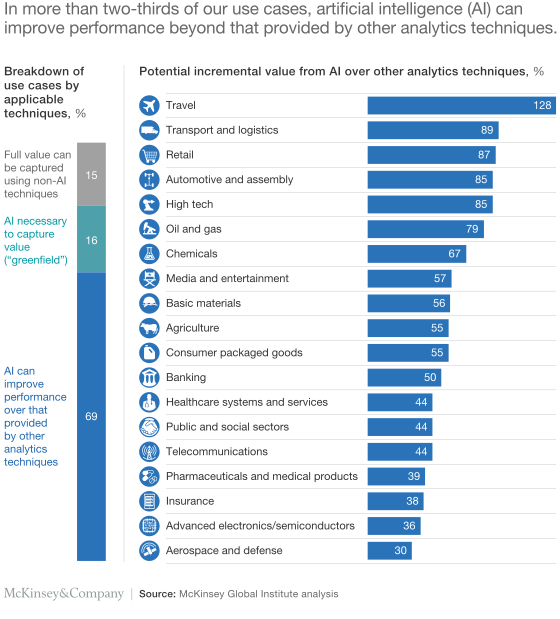
In 2030, McKinsey & Company, estimates that AI will deliver $6 trillion of value, annually.
Excitement is understandable. AI systems can process a billion data points before your morning coffee. AI does not forget, AI does not fatigue, and AI does not check Instagram during meetings.
The problem: AI does not understand.
This is machine learning. AI correlates without comprehending. AI recommends without reasoning. AI errs without emotion, worse, with confidence.
Artificial Intelligence Augmented
The danger is not that AI will outthink us. It is that we will stop thinking because it seems to. As explored in “Competing values drive your organization out of business” we forget that culture, human context, emotional intelligence still govern outcomes.
Leadership, too, is at risk of algorithmic erosion.
If every decision becomes data-driven, who owns the decision?
If culture becomes code, who maintains the assets?
If you do not start with intelligence, is it artificial to expect efficiency?
The future organization will need digital humility co-exist with systems smarter at calculation, but lack compassion or emotional intelligence, though lacking compassion and emotional intelligence can often be a sign of today’s leaders. Leaders, in turn, must reframe intelligence not as information, but as interpretation. That distinction will separate organizations that thrive from those that merely automate their own irrelevance.
In 2018 if you are arrange your AI investment, make sure the whole team aligns on:
- What decision process do I automate?
- Who is accountable to prompt AI quality?
- Who validates AI intent?
Make sure your soft assets are not surplus to hard assets. Data science can not compute behavioral science.