Organizations don’t simply run from a strategic plan prescription. Projected cash flows don’t deliver themselves. Business units don’t run in a …

Below you'll find a list of all posts that have been tagged as “portfolio planning”
Organizations don’t simply run from a strategic plan prescription. Projected cash flows don’t deliver themselves. Business units don’t run in a …
A recap on my series of six blogs around project scope. Includes links to slide deck and customizable templates: 1 of 6 — …

A stakeholder is anyone, or group, who can positively or negatively affect the outcome of the project. This post introduces two Excel template worksheets for stakeholder identification and management.
Prior to a project’s go-ahead this template identifies groups and individuals with a stake in the success, and failure. The effort makes sure we understand the key concerns and motivations of these audiences in order to mitigate risk to over-look or under-appreciate stakeholder position.

The bigger the risk, the bigger the reward. Elemental finance: you assume the amount of risk suitable for an expected payoff. …

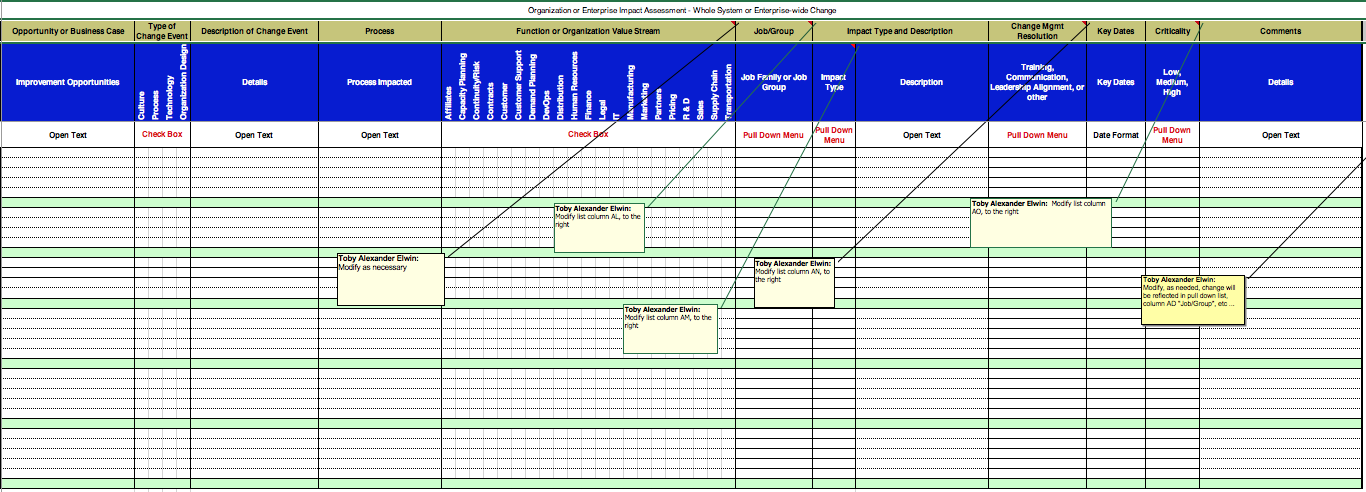
An impact analysis is an early-phase assessment to identify all stakeholders, their needs, their awareness, and their insight into the project – these people are not only sponsors and customers, but the people you want to invite people into the change. Involvement impacts success.
Just like a pebble tossed into a pond, projects cause ripples that carry beyond the initial splash. Projects sponsors who fail to link the change a project has to people, process, and technology risk project success and project adoption.

The key for organizations to grow and to thrive relies they ability to scope, manage, and deliver projects. How you and your …

To deliver what someone expects, when someone expects, and the price someone agrees to requires an ability to define scope.
When a project fails, resources are lost and organization pressure increases. The more projects that fail the more resistant people are to associate with, work on, or fund new projects.
This is a first in a series of scope and project management blogs and templates to improve project delivery with a set of tools and principles to understand and manage project scope, from impact assessment through stakeholder communication.

A venture’s viability really comes down to a bet on a team to deliver. It is the interpersonal process where venture performance …
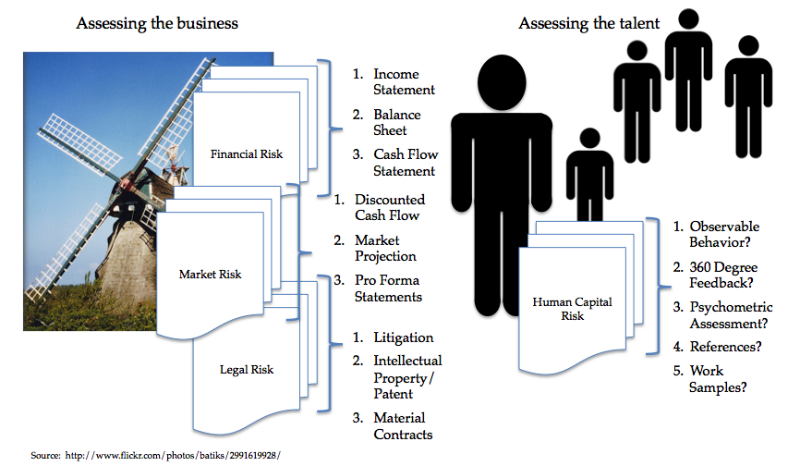
To identify where risk is a real part of the investment deal you will commonly hear an equity firm or VC …

If companies were built to last, than 4 of 10, almost 50%, would still remain on the the Fortune 500 a mere 10 years later.
Sustained success has less to do with market forces than company values; less to do with competitive position than personal beliefs; less to do with resource advantages than vision. Sustained success has to do with managing culture.
Organization change without an awareness of what drives the organization’s culture may be the reason close to 90% of all projects fail. Culture is key to remain great.

The ability to scope and deliver a project is a competitive advantage.
The best organizations realize project management capability as a strategic differentiator, the lagging organizations only staff project management skills within Information Technology departments.
I now rely on the term portfolio planning to describe the translation of strategy to a group of project options an organization can undertake. A portfolio view projects priority using the same risk and return criteria capital expenditures and other financial or strategic commitments are evaluated.

Technology enables information access and facilitates information sharing. But why do so many information technology projects fail? The information part of Information Technology …

An organization builds a culture of success when it can take a strategy, identify and prioritize the most important projects within …

“Lies, damned lies, and statistics”reminds us numbers don’t lie, but people do. Business can learn innovation from customer perception.

I find people have a tendency to become too involved too quickly with tactics. Tactics include what to buy, what to build, what to move. Strategy is why build, why buy, why move.
Much of your organization is involved in the detail of execution, it is illogical they are not strategically aligned. When your team discovers tactics they deliver align to organization goals there is clear purpose in what they do.
Purpose provides motivation.
The meat of the strategic planning process is the goals-objectives-actions value chain. People may have other definitions for goals, objectives, and actions, and bristle at the rigidity of the definitions, however, a single use for each term will remove interpretation and confusion.
I recently ran across a statistics book and began to think about similarities to strategic planning. Statistics: a mathematical science pertaining …