What is organization development? Yes organization development: It is almost more confusing than helpful to really say what organization development is. …

Below you'll find a list of all posts that have been tagged as “organization behavior”
What is organization development? Yes organization development: It is almost more confusing than helpful to really say what organization development is. …

In a healthy environment, admitting what you don’t know is part of the process to come to a shared understanding.
In an unhealthy environment sticking to a point you think you know, but do not really know, drives people to defend positions from a point of weakness that can easily turn into an indefensible point of embarrassment.
The separation from noise to decision is about want to know and who you know. Here are 8 steps to go from noise to decision.

Insight into corporate, social media strategy lends insight into governance. Insight into social media management lends insight into employee management.
A company marketing strategy and the people who lead, develop, and execute that marketing strategy, are a proxy for organization culture.
If web 1.0 brought about the concept content is king, the maturity to a web 2.0 and social media environment are achieved through the concept community is king. You can you develop a community unless you are a transparent part of a community.

Know your audience is a constant refrain. But sometimes, as a facilitator, trainer, or consultant, you may not, always, know your audience knows each other or what they will do together.
The icebreaker’s intent? Loosen things up, meet people, set the stage for effective work. Meeting icebreakers can be as painful as a bucket of ice down your shorts. Icebreakers run the risk of turning people off before you have even started the heavy lifting on why you are there.
Here is an icebreaker I have run for a least 10 years with consistent success setting up collaboration.

If your company and my company recruit the same person and your company can not motivate that person, but my company can keep that person motivated: I win.
I’ll take an employee with half the technical skills who is motivated, over an employee with more technical skills who is unmotivated. We maximize resources to survive and motivation management is resources management.
If your company and my company need a series of projects to roll out a new strategic plan and your company can not deliver on those projects, but my company can: I win.

Policy, procedure, and bureaucracy tend to creep as an organization grows in size: revenues, market share, employees. With that creep does organization …

Project management is a profession. Project management is a discipline. Project management is a skill. Project management is a function. Project management is a process. Project management is …

Change is fun for some: the energy of the unknown, the passion instilled in people looking forward to a new adventure. …

A successful message retains the oomph of intent. For this to happen communication must travel an obstacle course to reach each …

Fast Start conversation: We can not all be right. If someone is right, that implies someone is wrong. How does someone …

The success, or failure, of organization change may have more to do with the frame of change you and your leadership …

Crowdsourcing taps into the sociological power of people potentially unfamiliar with each other or with the situation. Crowdsourcing a strategic solution is the antithesis of the bureaucratic, and often autocratic, strategic planning performed by chosen few, behind closed doors, and finally unleashed unto the masses.
Appreciative Inquiry is a process where people participate and co-create a future they wish to be part of. Where people, formerly known as an audience of employees or stakeholders, now become the collaborators and designers who are approached as partners in modeling and forming organization strategy.
The result: replace a strategic plan pronouncement with strategic plan involvement.

Information is not competitive advantage, knowledge is competitive advantage. Until you socialize your information amongst others you never discover if the value of your information is actual knowledge. …

In this age of cheaper-faster-better resource management is critical to organization survival. The resource that poses the biggest organization management challenge, …

A leader’s job is to not create a space that causes so much pain that people must move, but to create a compelling future vision people are drawn to.
If leadership starts their focus on what did not work or what you do not want to happen then effort goes into putting procedures in place that constrain. If leadership focus starts on what worked or what it looks like when it worked and the focus shifts to how it worked to and what is achievable, what is possible.
Appreciative Inquiry, as a principle for design and change management, allows organizations to change the focus. Where we inquire, we move and Appreciative Inquiry changes the change.

When building a team the potential personality clashes and social miscues realize hiring the right person is more cultural over technical.

Organization change is the key to innovation. So, no change, no innovation. Or is it no innovation, no change? Well, change …
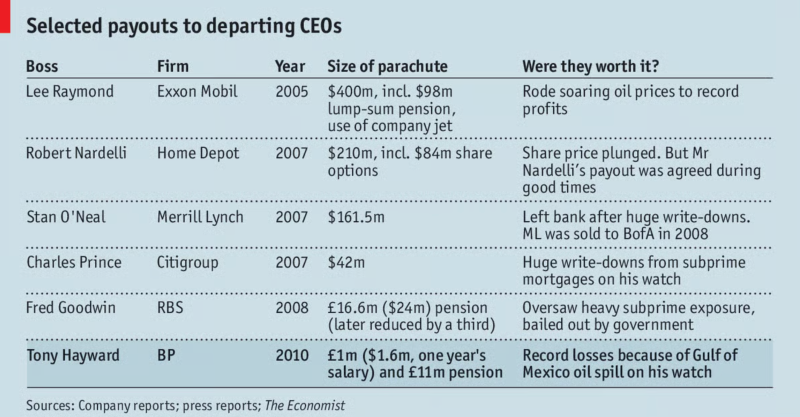
September 2010 in review. A roundup of blogs from the previous month: Golden parachutes reward risk or moral hazard? — No …